
Neurodivergent Burnout and What makes it Different
Burnout can happen to all people of all neurotypes, demographics and ages. What makes Neurodivergent burnout unique is that its causes, symptoms and recovery journey all look different to a typical neurotype experience. Neurodivergent burnout is chronically misunderstood by health professionals and the public alike, therefore often goes by unidentified, misidentified (most often as depression) and is subsequently mismanaged. Understanding how burnout differs in neurodivergent populations can help prevent unnecessary suffering through providing the opportunity for early identification, access to the right treatment and safeguarding prevention.

Why Neurodivergent Burnout is Different
Burnout is defined by WHO (the World Health Organisation) as an occupational phenomenon caused by chronic workplace stress that has not been managed successfully. Dr Dora Raymaker (a brilliant researcher in the field of Autism), describes in one study of Autistic burnout as happening due to “cumulative load” and “barriers to support” causing an imbalance in expectations vs the individuals’ internal resources.
The main difference in cause in neurodivergent burnout happens due to not just being overextended in our work, but existing in a world and in systems not designed for our brains. In the UK, 1 in 7 people are neurodivergent, so you are living in a world made for the majority who are estimated to have more typical neurotypes. Which means our wonderfully unique ND brains, often face unique daily challenges that contribute to burnout:
Masking or Camouflaging
Many people feel the need to hide their neurodivergent traits to fit in professionally and socially. This drains the persons internal resources and battery, leading to exhaustion.
Your Environments
A lack of understanding of neurodivergence or inclusivity in home, community, or workplace settings can invalidate an individual's experiences, create barriers to accessing support, and, in severe cases, foster discriminatory environments.
Sensory overload
Sensory overload from daily exposure to sensory experiences beyond the individual’s control can be overwhelming and contributes to daily stressors which accumulate. These experiences can be bright lights in the office, loud noises in the supermarket, or strong smells on public transport.
Executive Function Challenges
Tasks involving planning, organising, or lots of task transitions e.g. from meetings to desk orientated tasks, can be more demanding, increasing mental fatigue.
Social Interaction Strain
Navigating social cues and expectations may require extra effort, leading to emotional burnout.
Signs to Watch Out For
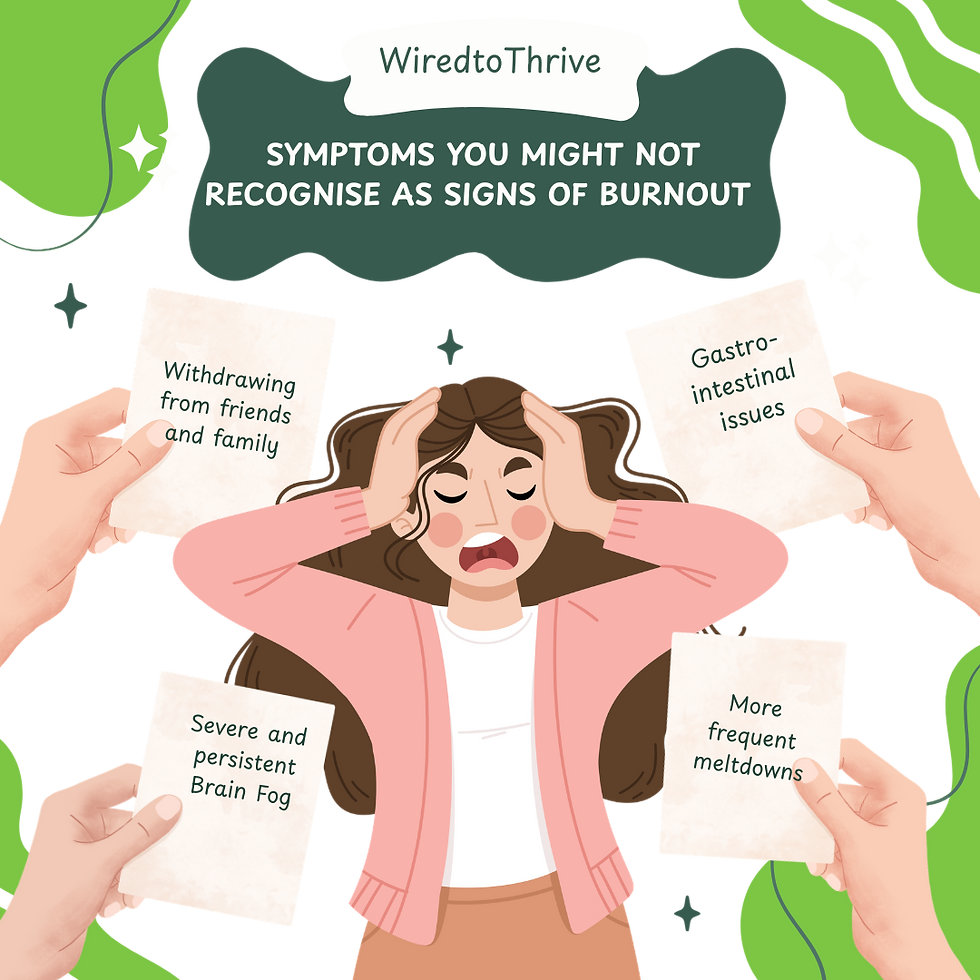
These symptoms are ones everyone feels from time to time. This is about persistent, consistent and different from your usual experience. If you are experiencing neurodivergent burnout you may feel:
Extreme fatigue which does not improve with rest (whatever rest means to you)
Changes in sleep and appetite
Increased difficulty with attention and processing
Heightened sensitivity to sensory input
Emotional numbness or feeling disconnected to yourself and others
Irritability and mood swings
Physical symptoms: headaches, stomach issues
Extreme overwhelm and increased task paralysis
Withdrawal from social interactions
This type of burnout can last longer and be more intense than neurotypical burnout, often requiring tailored approaches to recovery. Burnout needs to be taken seriously, as in severe cases can lead to suicidal thoughts and behaviours. Take action if these feel like you.
Real-Life Example
Consider Jamie, a person with ADHD and sensory sensitivities. Jamie works in a busy office with fluorescent lights, no natural light and constant background noise. To fit in, Jamie masks their ADHD traits, forcing themselves to sit at the desk for extended periods, engage in lots of office small talk and sit with everyone at lunch. Over time, Jamie feels mentally and emotionally drained, struggles to concentrate even on tasks they used to enjoy, and experiences headaches daily.
Recognising these as signs of neurodivergent burnout, Jamie talks to their manager about adjustments. Together they collaborate on a plan and a process of experimentation with workplace adjustments to see what works. Jamie starts with using a standing desk in a quiet corner of the office away from the corridor, they take regular movement breaks and go for solo lunchtime walks. Jamie's manager organises whole team training around neurodivergence to raise more awareness within the team. This helps Jamie to reduce masking by being more open about their needs. These changes help Jamie recover and maintain wellbeing.
Moving Forward with Awareness
Understanding neurodivergent burnout is essential for creating inclusive environments at work, school, home and communities. It calls for mutual respect, flexibility, and empathy for our diverse ways of thinking and spiky profiles. By recognising the signs and adapting support, neurodivergent individuals can find balance and avoid the deep exhaustion that burnout causes.
What to do next: Read WiredtoThrive blog post on How to Recover from Neurodivergent Burnout

References

Comments